← Explore all worldsExoplanet Detective
Find planets in the light of their star. Build a system, change each orbit, and uncover their combined shadows in a brightness graph.
Enable JavaScript in a browser with WebGL 2 to run this interactive simulation.
A planet around another star can reveal itself by blocking a little starlight. That crossing is called a transit.
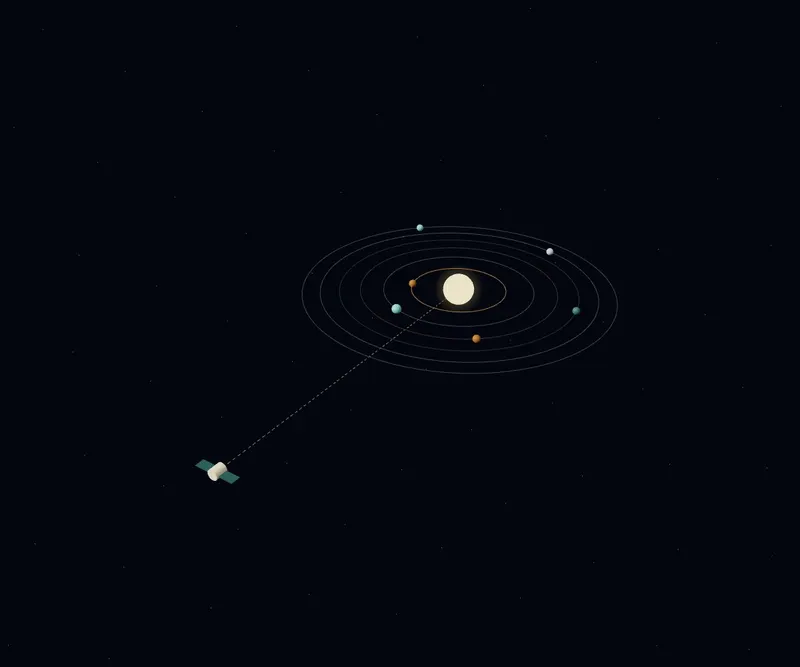
- The telescope view shows the star as seen by a distant observer. When planets cross in front, the brightness graph dips. Overlapping shadows count only once.
- A larger planet blocks more light and makes a deeper dip. The orbital period sets the time between repeating crossings.
- Add planet builds a system of worlds. Select a planet to change its size and orbit. A tilted orbit can carry it above or below the star, so there is no transit.
- The large orbit diagram compresses distances. The telescope view preserves the size of the planet relative to the star; this model uses an evenly bright star.
Try this: Compare two planet sizes, then tilt the orbit until the dips disappear. A flat graph does not always mean there is no planet.