← Explore all worldsLittle Continents
Move Earth’s plates. Build a mountain range, follow a sinking slab, and watch new ocean floor grow in a little geological cutaway.
Enable JavaScript in a browser with WebGL 2 to run this interactive simulation.
Earth’s outer shell is broken into moving plates. Their edges can build mountains, carry ocean floor underground, or make new crust.
- Collide squeezes two continents together. Their thick, buoyant crust crumples upward into mountains and downward into a deep root.
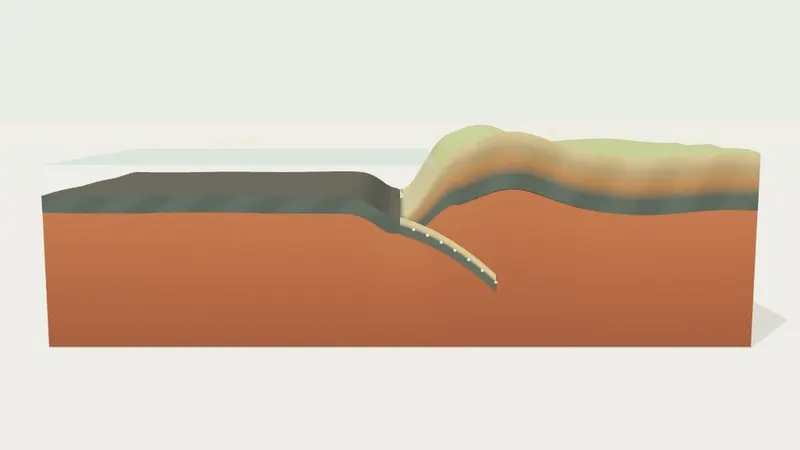
- Sink shows subduction: a dense oceanic plate bends beneath a continent. A deep ocean trench forms where the plate turns downward.
- Spread pulls two oceanic plates apart. Magma rises into the opening and cools into new crust. Orange and gold mark young rock; older rock is darker.
- Plate movement is the combined speed of the two plates. A few centimetres each year can add up to hundreds of kilometres over millions of years. Set movement to zero to stop the plates; ocean crust still ages as time passes.
Try this: Choose Sink, pause time, and select Cross-section to follow the slab underground. Then compare Spread at two plate speeds. Each choice starts a fresh 20-million-year experiment. Shapes and depths are exaggerated: this is an illustration, not a prediction of Earth’s future.