← Explore all worldsFirefly Grove
Little lights find a shared rhythm in a moonlit grove. Scatter their flashes, change how neighbours influence each other, and watch synchronisation emerge.
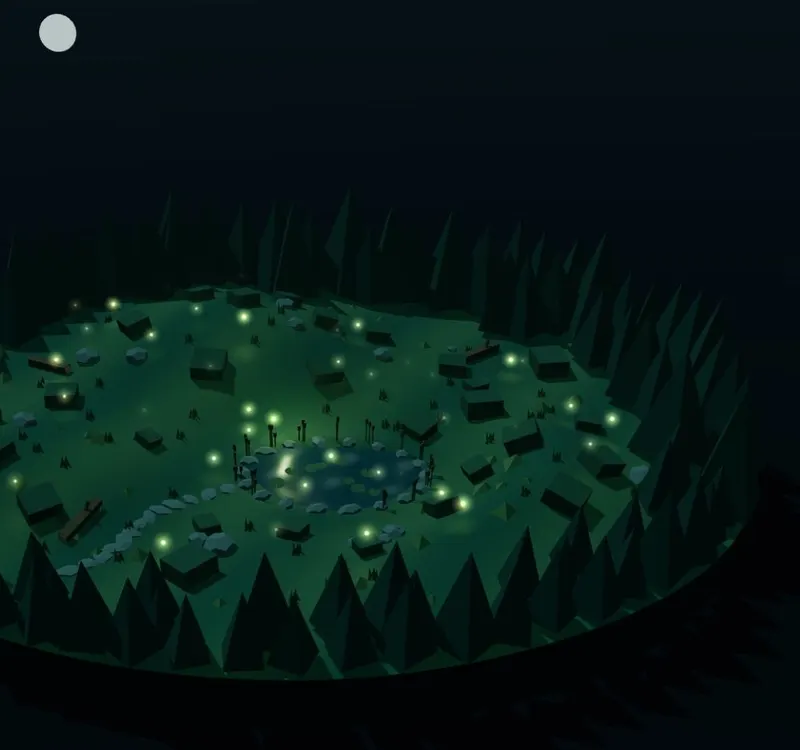
Enable JavaScript in a browser with WebGL 2 to run this interactive simulation.
Some firefly species can coordinate their flashes. Here, little lights gradually adjust their timing to their neighbours.
- Each firefly starts with its own flash cycle. Nearby neighbours pull those cycles closer together, so patches of matching light can grow.
- Synchronisation controls how strongly fireflies adjust their timing. Off lets every firefly keep its own rhythm.
- Neighbour reach changes the distance over which clocks interact. Rhythm variation makes their natural speeds more or less different.
- Rhythm alignment measures how closely the cycles match. A high value can mean the whole grove is dark together between flashes. The chart shows the average light over time.
Try this: Watch at 3×, then scatter the flashes and let the grove find its rhythm again. Compare Synchronisation Off with strong synchronisation using the same seed. Glow brightness changes only the view. This is a simplified clock model, not a recreation of any one firefly species.